
21 Hairstyles for Moms With Thin Hair


Fine hair has narrow strands, while thin hair has fewer of them, and plenty of moms notice both after pregnancy as the part widens and the ends go wispy.
The cuts that help most keep the ends blunt and the length at or above the shoulders, so the hair has weight where people see it.
The best of them also air-dry into shape, which helps on mornings when a blow dryer isn’t happening. Each cut below comes with one styling trick, and none need more than a dryer and one or two products.
Pixies and Crops
1. Textured Pixie Cut

An inch or two of length on top gives fine hair something to lift, and a textured pixie keeps that length. The sides are cut close, and the top can be pushed across a part that’s getting wider.
Work a pinch of volume powder into dry roots on top and push the hair forward or to the side with your fingers. Trims every four to six weeks keep it from going flat.
It takes about three minutes to style, which suits a morning when the baby woke at five.
2. Messy Pixie With Long Bangs

Thinning at the front hairline is what a messy pixie with a long fringe hides best. The fringe, about three to four inches long, sweeps across and covers the temples. Point-cut ends look softer.
Dry it roughly by hand, then twist some strands of the fringe with a pea-sized amount of paste. It takes two minutes.
Postpartum shedding often shows first at the temples, so this cut helps while the regrowth fills in. Keep the back soft so the fringe blends into it and grows out evenly.
3. Textured Crop

At one to two inches all over, the textured crop is the shortest cut here, and it suits very fine hair that won’t hold volume at longer lengths. Short hair weighs less, so it stands up on its own.
Rub a small amount of matte paste between your fingers and pinch it through the ends. That’s the whole routine. It dries in minutes.
A crop reveals the scalp more than a pixie does. If thinning at the crown bothers you, keep the top a little longer, about two inches. Short cuts handle a beanie well, and these hat-friendly hairstyles show how.
4. Modern Mullet

Shorter, choppy layers on top and around the face with more length at the back make a modern mullet. On fine hair, the short top lifts with little effort. It grows out easily into a shag.
Mist root lifter onto damp roots and blow-dry the top forward, then push it back by hand. A pea-sized bit of paste separates the ends.
A mullet is a strong look. For a softer version, ask for the back to be only a few inches longer than the front.
Bobs and Lobs
5. The Classic Bob

A classic bob at the jaw is the most reliable cut for thin hair, because a blunt, one-length edge makes the ends look as thick as the roots. Ask for no layers, or only a few hidden underneath.
Blow-dry it upside down until it’s mostly dry, then finish upright with a round brush on the ends only. It takes about ten minutes.
Blunt bobs show every bit of grow-out. Trim about every seven weeks so the line stays sharp and full. Bobs for fuller faces are in these hairstyles for round faces.
6. Graduated Bob

Hair that lies flat at the crown gets the most help from a graduated bob. It’s stacked short at the nape and longer at the front, so the back of the head looks rounder. It suits straight hair best.
Blow-dry the back with a small round brush, lifting each section straight up from the scalp. Finish with a light spray at the crown.
Graduation needs a precise cut. Book with a stylist who cuts bobs often, and expect a trim about every five to six weeks.
7. Sleek A-Line Bob

Straight thin hair looks most polished in a sleek A-line. It’s shorter at the back and angles longer toward the chin, which keeps the most hair around the face. It suits an office or a school meeting alike.
Blow-dry with a paddle brush, then pass a flat iron once over each section. A drop of lightweight serum on the ends adds shine without weight.
Sleek styles show the scalp at a thin part. Zigzag the part with the end of a comb to hide it.
8. Asymmetrical Bob

An asymmetrical bob is cut a little longer on one side, by about two inches, and that longer side gives thin hair a fuller edge near the face. It works best with a deep part on the long side.
Smooth the long side with a flat brush and rough up the short side’s roots by hand. That contrast is what makes the cut. It takes about five minutes.
Keep the short side above the jaw so the difference shows. Trims every six weeks keep the angle crisp.
9. Layered Bob With Bangs

A chin-length bob with curtain bangs adds fullness at the face without layers that thin out the back. Keep the bob one length and put the layering into the bangs only. Have the bangs cut dry.
Roll the bangs on one large Velcro roller while you get ready, then split them down the middle. It takes five minutes. For colors that add depth, see these easy-care hair colors.
Curtain bangs grow out without an awkward stage, which makes this cut forgiving between appointments. They also tuck into a ponytail on gym days.
10. Layered Lob (Long Bob)

If you don’t want to go short, a lob that grazes the collarbone is the longest cut that still looks full on thin hair. Keep the layers long, starting below the chin, so the ends stay full.
Roll the top section on two or three large Velcro rollers while you do your makeup, then take them out and shake the roots. Ten minutes covers it.
Too many layers make a lob look stringy. If you can see light through the ends, ask for fewer and longer ones.
Ask your stylist for
- Blunt ends, not thinned ones
- Point-cutting instead of thinning shears
- Layers no higher than the cheekbone
- A dry check of the ends before you leave
Longer Cuts and Layers
11. Blunt Cut With Subtle Layers

For longer thin hair, keep a blunt bottom edge and ask for a few long layers around the face only. The bottom line stays thick while the front moves. Straight or slightly wavy hair works best.
Smooth the ends with a flat iron on a low setting, bending them in a little at the very bottom. Fine hair burns faster, so keep the iron under 350°F. A flexible spray tames flyaways.
Long, blunt hair needs a trim every eight to ten weeks, or the ends start to thin and split.
12. Face-Framing Layers

Face-framing layers give thin hair movement at the front without cutting into the back length. Ask for them to start at the cheekbone or chin and leave everything behind the ears alone. They suit every length past the chin and need no daily styling.
Blow-dry the front pieces off your face with a narrow round brush, which takes two minutes. Layers that start too high on fine hair look like a mistake as they grow out, so cheekbone height is safest.
13. Feathered Layers

Feathered layers are cut with the scissor tips at an angle, which softens the ends. Request point-cutting only and no thinning shears, which take out hair that thin strands can’t spare.
Blow-dry each section back, off your face, using a round brush for the feathered flip. Hot rollers on the top section help it last into the evening.
Feathering suits fine hair that’s still dense enough at the ends, and it looks soft and grown-up for work. Book trims every eight weeks to keep the feathering.
14. Wispy Fringe With Long Layers

A wispy fringe at the brow suits long, thin hair because it adds hair at the front, where people look first. Keep the long layers to the front and leave the back length blunt.
Curl two-inch sections away from the face with a 1.5-inch iron, skipping the fringe. Smooth the fringe flat with a fingertip while it’s warm. It takes 15 minutes.
Long hair that’s thin at the ends looks thinner the longer it gets. If the bottom two inches are see-through, cut them off for a fuller line.
15. Piece-Y Layers With Side Part

Piece-y layers with a side part suit thin hair that’s straight and medium length. The layers are short enough to separate into pieces, and the side part piles more hair on one side. It suits medium hair with some wave.
Work a dry texture spray through the ends and twist a few pieces with your fingers. Style it on dry hair only.
Too much product makes fine hair look stringy instead of piece-y. A dime-sized amount covers the whole head. Pick a matte spray over a shiny one.
16. Choppy Shag

A choppy shag uses short layers around the crown to make fine, straight or wavy hair look fuller on top. Ask for the layers cut with scissors, since a razor can leave fine ends frayed.
Air-dry with a texture spray worked through damp hair, then diffuse the crown for a minute to lift the roots. Scrunch as it dries.
Shags rely on layers, so they suit fine hair better than thin hair with sparse ends. If your ends are see-through, a blunt cut is a better match.
17. Side-Swept Bangs With Shoulder Length

Side-swept bangs cover a thin hairline at the temples and give a shoulder-length cut some shape around the face. Ask for the bangs to start from a deep side part and hit around the cheekbone.
While you blow-dry the roots, flip your part to the other side for a few seconds, then flip it back. The roots stand up instead of lying flat.
Bangs on fine hair get oily fast. A puff of dry shampoo on the bangs alone keeps them fresh an extra day.
Styling Tricks
18. Tousled Beach Waves

Waves make thin hair look fuller because the bends take up more space than straight strands. On dry hair, wrap two-inch sections around a 1.25-inch curling iron, leaving the last inch out. Allow 15 minutes.
Alternate the direction of each section so the waves don’t clump together. Shake them out once they cool. Spray heat protectant first.
Skip salt sprays if your hair is dry, since they make fine ends feel like straw. A light texture spray gives grip without the crunch. Waves last two days.
19. Voluminous Curls

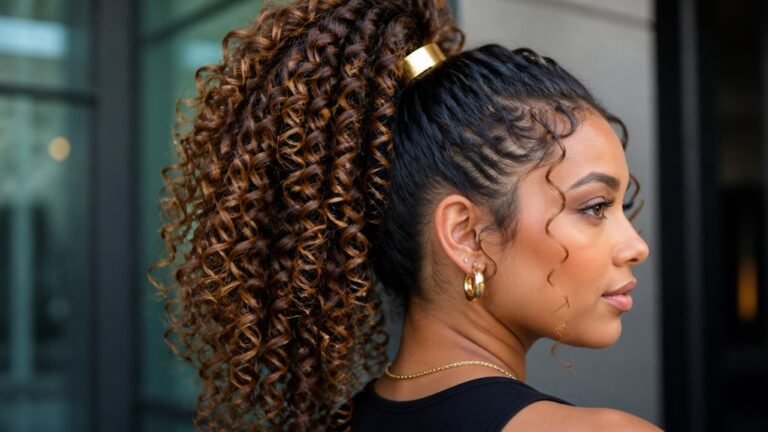
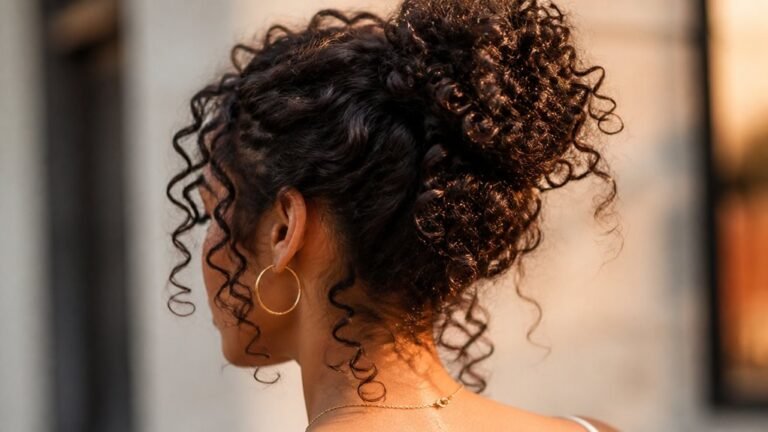
Fine curly hair needs lighter products than thick curls, or the curls sag. Use a foam or mousse instead of a heavy cream, and diffuse on low with your head tipped to one side.
Clip the roots on top with small duckbill clips while they dry for extra lift. For styles sorted by curl type, see these curly hairstyles for women.
Fine curls show buildup fast, so a clarifying wash every few weeks keeps them bouncy. Sleep on a silk pillowcase to keep the shape.
20. Soft Finger Waves

Soft finger waves give fine hair shape for a dressy event. On damp hair with setting lotion, push the hair into S-shaped ridges with your fingers and a fine-tooth comb, clipping each ridge as you go. It takes 30 minutes.
Let it dry fully under a hooded dryer or overnight, then remove the clips without brushing. The waves hold for a day. Practice once before the event.
Finger waves suit a wedding, a holiday party or an anniversary dinner, and they look best on chin-to-shoulder lengths.
21. Bouncy Blowout Style

For an evening out, nothing makes thin hair look thicker than a bouncy blowout. Apply root-lift spray, rough-dry until mostly dry, then dry two-inch sections over a ceramic round brush with the nozzle pointed down the hair shaft.
Set each finished section in a big Velcro roller while it’s warm, and take them out after ten minutes. Brush them out gently with your fingers.
A blowout lasts two days on fine hair if you sleep on silk, and dry shampoo at the roots stretches it a third. For party updos, see these New Year’s Eve hairstyles.
Choosing Your Cut
Pick the cut first and the styling second. A blunt bob, graduated bob, or textured crop does the most for very thin hair, while long layers and shags suit fine hair that still has full ends.
Trim every six to eight weeks and keep heavy products off the roots. If thinning is new or getting worse, see a dermatologist before you change your cut.
Frequently Asked Questions
What Hair Products Work Best for Adding Volume to Thin Hair?
Volume powder at the roots, a root-lift spray, and a lightweight mousse do the most for thin hair. Keep heavy creams, oils, and silicone serums away from the scalp, since they weigh fine hair down.
How Often Should I Wash Thin Hair to Avoid Damage?
Fine hair gets oily faster, so many people with thin hair wash every day or every other day. Regular washing doesn’t cause thinning. A sulfate-free shampoo is easier on dry ends.
Can Certain Vitamins or Supplements Help Improve Thin Hair Thickness?
Supplements help only if you’re low in something, like iron or vitamin D, and extra biotin does little when levels are normal. If your hair has thinned suddenly, see a doctor or dermatologist, who can test for deficiencies or thyroid problems and discuss treatments like minoxidil.
What Blow-Drying Techniques Prevent Further Thinning and Breakage?
Use a heat protectant, keep the dryer moving, and finish on the cool setting. Rough-dry to 80 percent with your fingers before you pick up a brush, since brushing wet fine hair snaps it. Keep flat irons and curling irons at or below 350°F.
Are There Specific Hair Colors That Make Thin Hair Appear Fuller?
A color close to your scalp tone makes thinning less visible, so very dark hair on fair skin shows more scalp than a softer shade. Fine highlights or babylights around the face add depth and make the hair look denser.




3 Comments